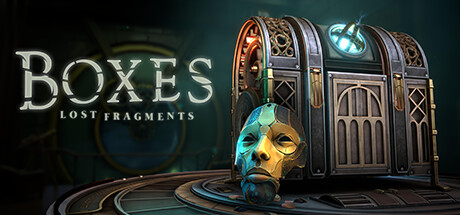
Claim it. That’s the whole verdict. Boxes: Lost Fragments hits Epic Games Store for free on February 26, and you have until March 5 to grab it. It normally costs $14.99 on Steam, has an 84 on Metacritic, an 82 on OpenCritic with 100% of critics recommending it, and 2,800+ “Very Positive” reviews. For a six-hour puzzle game about mechanically intricate boxes, that’s an absurdly clean sweep. If you’ve ever finished a Room game and immediately opened the App Store looking for something similar — this is the game you’ve been looking for.
What Is Boxes: Lost Fragments?
You’re a thief. Your target: a lavish mansion. The job immediately goes sideways. That’s the setup, and it’s mostly a wrapper. The story touches on dark matter energy, a mysterious figure named Aurora, and notes scattered through the mansion — but GameGrin called it a “paper-thin tale,” which is accurate. You can ignore it entirely and lose nothing except some lore footnotes.
What you’re actually here for: twenty puzzle boxes across five chapters, each one built around a distinct visual theme with its own locks, mechanisms, and micro-puzzles. A vintage car. A slot machine. A stone temple. Each chapter puts four boxes between you and the door to the next floor, plus one larger environmental puzzle that requires fragments you collect from completing the boxes. It’s well-structured — each box feels like a self-contained win, and the fragment system gives you clear forward momentum.
The developer is Big Loop Studios, a Portuguese indie team. They previously made Doors: Paradox, which works similar territory. Publisher is Snapbreak. Released February 1, 2024. The name that will resonate for context: Fireproof Games, makers of The Room series. Boxes is explicitly in that lineage.
How the Puzzles Work
Controls are simple: left-click to interact or zoom in, right-click to pull back. Most interactions — rotating dials, sliding panels, lifting latches, dragging inventory items — happen with the left mouse button held or clicked. Takes about ten minutes to feel completely natural.
The challenge isn’t the controls. It’s noticing. Each box has a 360-degree view, and not every interactive element announces itself. A loose rivet. A barely-visible seam on the bottom corner. That discovery loop — wait, that moves — is what GameLuster called “addictive,” and they’re right. Once you figure out that locks can hide anywhere on a box, you develop a methodical scan routine that feels genuinely satisfying to execute.
The mechanisms are varied. Rotate gear trains to align symbols. Slide panels to reveal keyholes. Connect fuses to route power. Pull levers in sequenced order. Items you pick up sometimes conceal sub-puzzles — a key in your inventory might open to reveal a smaller piece hidden inside. JumpDashRoll’s reviewer put it plainly: “I lost track of how many different ways there were to open a hatch or unlock a drawer.”
What Big Loop Studios got spectacularly right is the sound design. Every click, every gear engagement, every unlocking mechanism has audio that matches its weight. A heavy iron latch sounds different from a brass one. The moment a compartment finally opens — after you’ve spent five minutes working through the steps — there’s a very specific satisfying click that functions as its own reward screen. It’s why Steam reviews describe the game as “ASMR,” and that’s not wrong. If you play this, use headphones. The right gaming headset makes a real difference here.
Where It Deviates From The Room Formula
GameSpew’s 7/10 noted the obvious: Boxes “takes heavy inspiration from The Room.” Fair. If you’ve never played The Room, irrelevant. If you have, know that this isn’t reinventing anything — it’s a high-quality iteration on an established template.
What it does differently is variety. The Room keeps you in a single contained puzzle space. Boxes gives you twenty distinct physical objects and rotates the rules with each one. Around chapter three, the game starts introducing variations — a reflex element, a 2.5D platforming section, one chapter structured around what amounts to Grandma’s Footsteps. None of it feels jarring because each variation is embedded in the box’s own theme. They’re mechanical surprises, not genre pivots.
The floor puzzles between chapters break the rhythm well too. One chapter has you assembling fragments to power a projector that screens a film you need to study for clues. That’s a solid design choice — it forces you to think about the space around the boxes, not just the boxes themselves.
Difficulty sits on the accessible side. GameGrin noted it “falls in the realm of hidden object games with light puzzle-solving elements.” This is not The Witness. There are no logic chains that require pen-and-paper note-taking. Most solutions reveal themselves through careful observation and patience rather than abstract reasoning. That’s a feature for most players and a limitation for hardcore puzzlers. Know which one you are.
The Honest Verdict on Runtime
Six hours. Every critic says six hours, and Steam reviews back it up. LadiesGamers gave it a “Loved” and wrote: “My only complaint — which isn’t really a complaint — is that I wish the game was longer. I was disappointed to be finished after six hours.” That’s the authentic response from someone who enjoyed it. You’ll probably feel the same way.
At $14.99 on Steam, six hours works out to $2.50 per hour of entertainment — fine, not exceptional. But compare it to the right thing: a single real-life escape room session runs $25–$40 per person and lasts about 60 minutes. Boxes gives you the equivalent of six escape rooms for free. That framing helps.
There’s no meaningful replay value. Solved puzzles stay solved. You can revisit for secrets you missed, but this isn’t a game that rewards a second full playthrough. Play it, enjoy it, move on.
If the escape room angle got your attention and you want to go further, physical mechanical puzzle boxes deliver some of that same tactile satisfaction in the real world — and they make excellent gifts.
Who Should Claim This
Claim it immediately if you:
- Enjoyed any game in The Room series (worth picking up on Steam if you haven’t — around $5–$10)
- Like escape rooms in real life
- Want something you can finish in a weekend without a tutorial wall
- Play games with headphones — the sound design is genuinely part of the experience
Skip it if you:
- Need replay value or ongoing content
- Want something mechanically novel rather than mechanically polished
- Are hoping for a compelling story — the narrative exists, but barely
Tech Details
Windows only. Minimum spec: 2.8GHz dual-core, 1GB VRAM, 8GB storage. If your PC was built after 2015, you’re fine. Supports 14 languages including English, French, German, Spanish, Italian, and Simplified Chinese.
Steam Deck: the controls are simple enough that the Deck handles it cleanly. The touchscreen adds a layer of tactility that actually improves the experience — touching the puzzle box directly on the glass feels more appropriate than a mouse does.
How to Claim
On February 26 at 11 AM ET, go to the Epic Games Store and claim it free. It stays free until March 5 at 11 AM ET. Free Epic account required. No subscription, no purchase. After that date, it goes back to $14.99 on Steam — at that price it’s still worth it for the right person, but at $0 there’s no reason not to grab it.
The other February 26 freebie is My Night Job — a 2016 arcade-action game about defending a monster-infested mansion with over 60 weapons. Very different energy. If you want something fast and chaotic after six hours of quiet puzzle-solving, it pairs nicely.
Other Free Games Worth Knowing About
Building out your free game library? A few recent highlights:
- Return to Ash — free on Epic right now through February 26. A 3-hour visual novel that hits harder than it has any right to. Claim it before it expires.
- Nobody Wants to Die — neon-noir detective story with stunning visuals. Was free in February. Still cheap on Steam if you missed it.
- The Darkside Detective: A Fumble in the Dark — a genuinely funny mystery game that was free last week. The dialogue alone is worth it.
The Bottom Line
84 Metacritic. 82 OpenCritic. 100% of critics recommend it. 2,800+ Very Positive reviews on Steam. Twenty puzzle boxes, five chapters, and six hours of the most satisfying tactile puzzle gameplay you’ll find outside the Room series — free on Epic starting February 26.
The runtime is short. The story is thin. But the puzzle design is excellent, the sound work is genuinely special, and Big Loop Studios did something harder than it looks: they made twenty boxes feel different from each other without losing the thread of what makes them fun.
Claim it. Play it over the weekend. You’ll be done Sunday night wishing there was more.